

Temperature control is critical in cold chain shipping, preserving highly perishable items like pharmaceuticals and food until they reach their destination. Dry ice is effective but carries risks such as explosion, suffocation and frostbite.
Many shippers now choose safer, more sustainable alternatives like gel packs. But which option fits your needs better? This guide compares both to help you choose the best cold shipping solution for your cargo, team, and the environment.
What Are the Drawbacks of Using Dry Ice in Shipping?
While dry ice can be ideal for materials that must remain frozen, the Department of Transportation and the International Air Transport Association classify it as a hazardous material. Here are the top concerns surrounding dry ice for shipping.
1. Hazards
Improper handling of dry ice is potentially dangerous to handlers and goods.
- Asphyxiation: Dry ice sublimates, transitioning directly from a solid to a gas without melting. While this makes it less messy, the gas buildup may pose an asphyxiation risk in enclosed spaces. Prolonged CO2 exposure can result in life-threatening health issues. When using dry ice in enclosed areas, take special precautions to prevent oxygen displacement during shipping, including ensuring sufficient ventilation.
- Cryogenic burns: Dry ice starts sublimating at a surface temperature of minus 109.3° Fahrenheit. This extreme cold can cause severe tissue damage similar to frostbite. Direct contact with the skin damages cells in seconds. It can also chemically burn materials like plastic and rubber. Never handle dry ice without thick, insulated gloves, safety glasses, closed-toed shoes and tongs.
- Pressure buildup: Every pound of dry ice produces up to 250 liters of CO2. Trapped pressure can build and cause packages to burst, risking injury and damage.
2. Costs
Dry ice can incur hidden costs due to several factors.
- Price fluctuations: In some regions, dry ice can cost several dollars per pound due to limited availability. Pricing may also vary widely based on seasonal demand and supply constraints. This unpredictability complicates budgeting.
- Sublimation: Dry ice begins disappearing immediately after production. When planning inventory and budget, businesses should anticipate an average daily loss of 5% to 10% of their dry ice.
- Freight charges and labeling: Carriers charge between $5 and $7.50 per package for dry ice shipments in addition to the base shipping fee and applicable surcharges. They also require separate hazardous material labels and special contracts for shipments containing over 5.5 pounds of dry ice.
3. Packaging Limitations
Dry ice introduces packaging constraints that may complicate shipping.
- Very low temperatures: Not all packaging can withstand below-freezing temperatures, so dry ice requires specialized, often costly, materials.
- Venting: Dry ice packages must allow gas to escape to avoid complications caused by pressure buildup. Venting can reduce the insulation’s efficiency and shorten hold times.
- Special labeling: Most carriers require hazardous material labeling for dry ice. For air freight, this includes a Class 9 hazard label and marking your package with “Dry Ice” or “Carbon Dioxide Solid” followed by “UN 1845.” Incorrect labeling can slow shipping.
- Volume changes: As dry ice sublimates, it leaves empty space in the container that may allow the packed material to loosen and shift during shipment, making it more vulnerable to damage.
Best Dry Ice Alternatives for Shipping
Luckily, dry ice is not the only option for cold chain shipping. Let’s compare the pros, cons, cost and sustainability of the top three dry ice alternatives.
1. Gel Packs

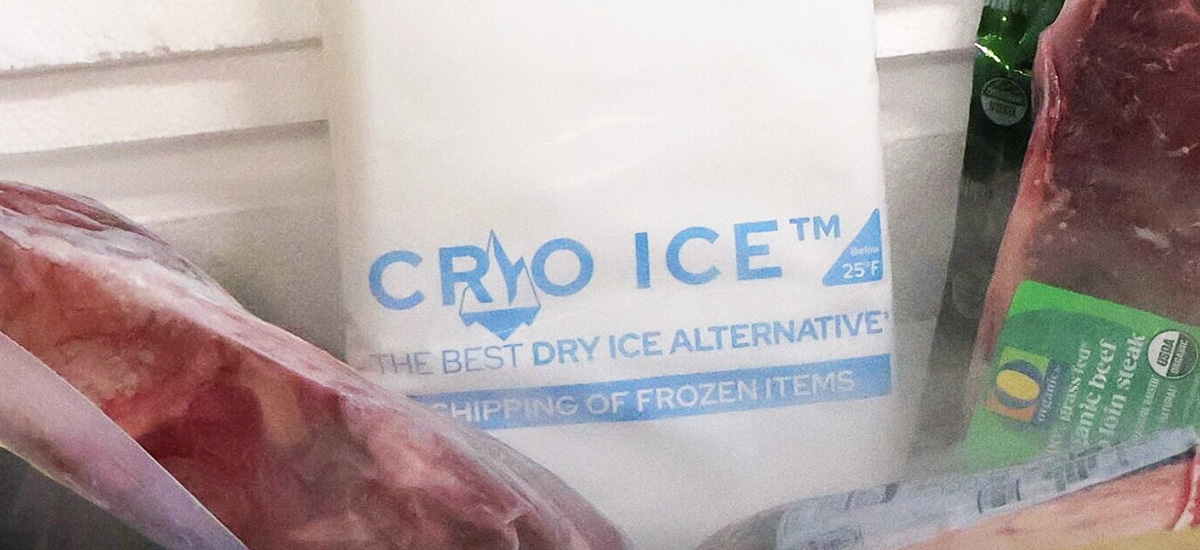
Gel packs are reusable, nontoxic pouches filled with water-based or polymer gel that freezes and absorbs heat from the surrounding area. They’re ideal for products that need to stay between 32° and 50° Fahrenheit when traveling short or medium distances. Innovative gel packs like Cry Ice™ keep products frozen solid below 25° F without the drawbacks of dry ice.
Gel packs cool efficiently, require no safety gear and avoid hazardous material fees. However, they are not suitable for items that need ultra-low temperatures, particularly for those traveling long distances.
2. Phase-Change Materials
Phase-change materials absorb and release heat energy as they move between their solid and liquid forms. While gel packs are mostly water, a phase-change material, PCMs refer to engineered materials such as hydrated salts and paraffins. These melt at controlled temperatures between 8° and 117° Celsius for hydrated salts and 46° to 68° Celsius for paraffins.
Phase-change materials enable precise temperature control, making them ideal for shipping sensitive items over midrange distances.
While PCMs offer more flexibility and accuracy than gel packs, they are also costlier. You’ll typically need to order them from specialized suppliers due to their complex formulations, which also make them harder to dispose of.
Some PCMs have lower environmental footprints due to their specific compositions. However, producing these specialty PCMs can have an adverse impact due to the energy-intensive processes involved. PCMs also have a typically low latent heat of fusion compared to traditional gel packs or dry ice.
3. Vacuum-Insulated Panels
Vacuum-insulated panels are not refrigerants, but highly efficient thermal insulation materials. They can significantly slow heat transfer. A rigid and porous core material sealed within an airtight envelope lets them nearly eliminate heat transfer for extended periods.
VIPs can keep items cool or frozen for a week to 10 days, making them ideal for extended-duration and international shipments, especially if delays are a concern. While they provide excellent thermal protection, they can be fragile and expensive — one puncture compromises their performance.
VIPs may also be more expensive than dry ice and gel packs. While they can extend transit times and reduce refrigerant volume, you only gain a return on investment when you consistently reuse them. While they can be sustainable in that sense, their disposal is complex due to their composite materials.
Choosing a Dry Ice Alternative
If you’re unsure which option to choose, ask yourself the following questions to guide your decision:
- What is the recommended temperature range for my products?
- How does this choice align with my sustainability goals?
- How will this impact handling and compliance?
- What’s the cost after the initial purchase?
- Is the option scalable to my operations?
Frequently Asked Questions
Gain insights into dry ice handling and potentially superior cold shipping solutions.
Is Dry Ice Safe for Food?
Dry ice keeps food frozen, but it can pose health and safety risks. Immediately discard foods that contact dry ice.
Is Dry Ice Safe for Drinks?
Dry ice has strict shipping requirements. The sublimation process creates a pressure buildup and displaces oxygen, which can pose an explosion risk. If you choose to use dry ice, carefully separate it from beverages with proper insulation and ventilation to prevent potential hazards.
How Much CO2 Does Dry Ice Give Off?
Dry ice can release up to 250 liters of CO2 per pound.
What’s the Impact of Dry Ice on the Environment?
Dry ice has a neutral environmental impact when sourced from recycled industrial CO2. However, CO2 is a greenhouse gas that contributes to global emissions. Nonrenewable dry ice production consumes a significant amount of energy. Handling and transporting dry ice also requires specialized gear and packaging, which can add to its carbon footprint.
What Is a Safer Alternative to Dry Ice?
Gel packs are easier to handle, reusable and cost-effective, making them a wise choice for temperature-sensitive shipping.
Make a Smarter Cold Chain Decision With Pelton Shepherd

While dry ice poses risks and involves hidden costs, eco-friendly alternatives are safer and more affordable. Pelton Shepherd Industries used our decades of experience in developing innovative cold chain shipping solutions to design a no-nonsense alternative to dry ice.
We manufacture our Cryo Ice™ gel packs with a specially formulated water-based gel that maintains temperatures below 25° Fahrenheit. It’s the ideal temperature control solution for frozen shipments, particularly for the pharmaceutical and perishable industries.
Its tough recycled plastic film makes it puncture-resistant, reducing the risk of leaks and damage to sensitive products. These gel packs are also safer and easier to handle than dry ice, with a low environmental impact due to their reusability and versatility.
Request a quote online or call us at 888-477-3570 to learn how Cryo Ice™ can be your simpler, safer and more cost-effective alternative to dry ice.