
Shipping fresh produce requires specialized care to deliver excellent products that satisfy customers and protect your bottom line. Since fruits and vegetables continue to ripen and respire after harvest, proper packing is essential to preserve their freshness and ensure your shipments arrive in sellable condition. It also helps you meet regulatory standards, avoid product loss and build trust with customers who rely on consistently high-quality items.
Our step-by-step guide will explain how to ship produce, from precooling and container selection to temperature control and compliance labeling.
Your Step-by-Step Guide to Packing Fresh Produce
Learn how to ship fresh vegetables at the ideal temperatures to preserve freshness and meet industry standards.
1. Precool Your Produce for Transit
Cooling produce to the appropriate temperature after harvesting preserves quality and shelf life by slowing respiration and delaying ripening. It can also reduce moisture loss and keep condensation from forming inside your shipping containers, preventing mold growth. You can use different methods depending on the type of produce and your operation, including forced-air, hydrocooling or vacuum cooling.
You want to bring your produce down to the correct temperature before packing, not after sealing the shipment and sending it on its way.
2. Select the Right Insulated Containers
Your shipping container serves as the primary barrier from external temperature fluctuations and physical damage. According to USDA TEFAP specifications, containers should be:
- Good commercial fiberboard
- Properly sized to prevent slack filling
- Able to withstand an edge crush test to demonstrate durability during stacking and handling
Insulated containers maintain the cold chain by reducing heat transfer from the external environment. Corrugated boxes with insulating liners or foam-insulated shipping boxes are excellent choices, depending on the distance your shipment will travel and the ambient temperatures it will encounter.
Your container size must match your product volume. Overpacked boxes can lead to bruising and crushing, while underpacked boxes allow products to shift during transit, increasing the risk of physical damage.
3. Use High-Performance Gel Packs for Temperature Control
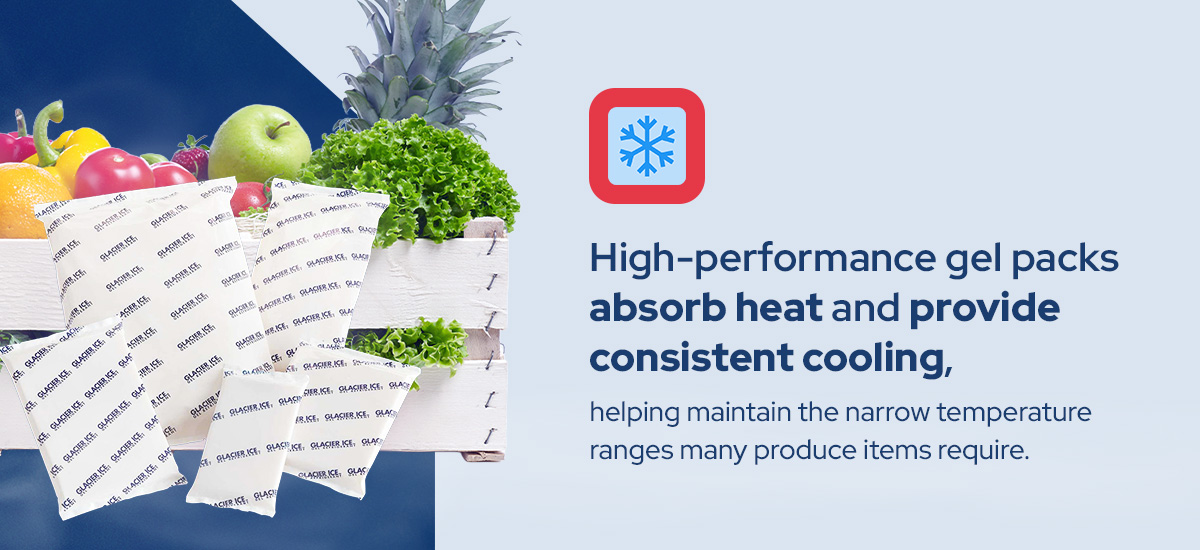
After precooling your produce and placing it in the appropriate container, shift your focus to maintaining temperature in transit. High-performance gel packs absorb heat and provide consistent cooling, helping you maintain the narrow temperature ranges many produce items require.
Gel packs store thermal energy as they thaw, slowing the warming of your shipment. Unlike traditional ice, they do not leave puddles as they melt. You can also freeze them to specific temperatures for different needs.
Position the gel packs strategically to create even cooling throughout the box — usually on top of the produce or along the sides of the container. Avoid direct contact between gel packs and delicate items like berries or leafy greens, since extreme cold can cause localized freezing or chilling injury.
4. Pack, Cushion and Seal Your Shipment
The final packing steps protect your produce from physical damage by securing them during handling and transit. Use cushioning materials such as paper dividers, molded pulp trays or bubble wrap to prevent bruising and abrasion. Individually package fragile items like tomatoes or peaches or layer their trays for extra protection.
Moisture-absorbent liners wick away condensation and keep packaging materials dry, which is essential for shipments traveling long distances or moving through different climate zones.
After packing everything in a structurally sound box, close the flaps properly to prevent items from shifting or exposure during transit, then seal your container with durable packing tape.
What Makes Shipping Produce Unique?
Fresh produce presents challenges that most other shipped goods don’t. Unlike manufactured products, fruits and vegetables stay biologically active after harvest. They respire, release gases and respond to temperature and humidity changes. Understanding how these biological factors influence product quality and shelf life is essential when shipping fresh fruit, vegetables or other perishable items.
Anticipate these three primary challenges.
- Ethylene gas exposure: Some produce items naturally emit ethylene, a plant hormone that accelerates ripening. High-ethylene producers like apples and bananas can cause nearby ethylene-sensitive items, such as leafy greens and carrots, to spoil faster. When planning to ship fresh fruit and vegetables, you’ll need to separate these items or use physical barriers to protect them in transit.
- Chilling injury: Some items suffer when stored at too-cold temperatures, even above freezing. As a result, produce might start pitting, show discoloration or water-soaked spots or fail to ripen properly.
- Humidity imbalances: Different produce types require specific humidity ranges. Too little moisture leads to wilting and weight loss, while excessive moisture promotes mold growth and decay.
Understanding these variables lets you create the best environment to protect produce in transit. Tropical fruits like bananas and mangoes need warmer holding temperatures to avoid chilling injury, while berries and leafy greens need colder conditions to slow respiration and extend shelf life.
Understanding Shipping Regulations
You must comply with federal regulations when shipping fresh produce commercially. The FSMA Produce Safety Rule requires farms and facilities to follow scientifically validated protocols throughout the supply chain, from cultivation and harvest through packing and storage. These standards reduce the risk of foodborne illness and ensure produce reaches consumers intact.
PACA Good Delivery Guidelines provide industry standards for determining whether a shipment is acceptable upon arrival. Under PACA, a product that has deteriorated beyond what would be the norm under typical conditions may be subject to rejection or price adjustments. Proper packing, temperature control and handling are your best defenses against these issues.
Best Practices for Labeling Perishable Shipments
Legible, accurate labeling is a regulatory requirement and a practical necessity. The USDA TEFAP specifies that the outside of your shipping container should include the vendor or shipper name and address, a description of the box contents and the product’s net weight. Adding handling instructions like “Perishable” and “Keep Refrigerated” can ensure your shipment receives appropriate treatment during transit.
Proper labeling also supports traceability, which is essential for food safety compliance and easier inventory management. If a shipment experiences delays or quality issues, labels make it easier to identify the source, track the timeline and correct it.
Partner With Pelton Shepherd Industries
Shipping fresh produce poses multiple challenges, from spoilage risk to complex regulations. Whether you’re new to cold chain logistics or refining your current process, Pelton Shepherd Industries can help. We specialize in high-performance gel packs that keep perishables at optimal temperatures throughout transit, reducing loss and protecting product quality.
We tailor our solutions to fit your operation’s needs, including the first and only truly compostable gel pack, Terra Ice™, and our most cost-effective, sustainable option, Vortec Ice™. When you’re ready to find the perfect compatibility for your shipments, request a quote and partner with a team that understands cold chain logistics.