

Shipping perishable goods with dry ice is a common practice, but it comes with serious safety risks and complex regulatory requirements. Proper handling is vital for protecting employees, keeping shipments on schedule and maintaining compliance. Practical step-by-step tips help you learn how to ship products with dry ice correctly.
You can also opt for a modern alternative that eliminates hazmat complications, reduces costs and streamlines your cold chain operations. Whether you’re new to temperature-controlled shipping or looking to optimize your existing processes, understanding both options helps you make the right choice for your business.
Is Dry Ice Dangerous?
Dry ice is dangerous because it’s solid carbon dioxide that sublimates directly to a gas at temperatures above minus 109° Fahrenheit. This unique property provides effective cooling but also creates hazards. While dry ice is not directly toxic, the Department of Transportation (DOT) and the International Air Transport Association (IATA) classify it as a Class 9 hazardous material and heavily regulate its transport.
The main dry ice hazards stem from sublimation itself. As dry ice transitions to gas, it releases carbon dioxide that displaces oxygen in enclosed spaces such as aircraft cargo holds. This oxygen displacement can lead to asphyxiation when concentrations reach dangerous levels. Workers handling shipments in confined areas face the greatest risk.
Pressure buildup presents another serious concern. When dry ice sublimates inside sealed or poorly ventilated containers, expanding gas creates internal pressure that can rupture packaging and cause explosions. Direct contact with dry ice can cause severe frostbite or cryogenic burns within seconds, making proper protective equipment essential for anyone handling it.
A Step-By-Step Guide to Dry Ice Shipping
Following dry ice shipping regulations is crucial for compliance and safety. If you’re packing dry ice for transport, follow these steps to prepare your shipments correctly and avoid mail carrier rejection:
1. Choose the Correct Insulated Packaging
Ventilation is a critical packaging requirement for dry ice. Airtight containers are strictly forbidden because they trap sublimating carbon dioxide gas and create dangerous pressure buildup. Code of Federal Regulations (CFR) 49 § 173.217 requires well-ventilated packaging that permits continuous carbon dioxide release, preventing pressure accumulation.
Thick, expanded polystyrene (EPS) foam coolers inside sturdy cardboard boxes are typically the best packaging solution. The foam maintains temperature while the box structure allows necessary gas venting.
2. Determine How Much Dry Ice You Need
The necessary amount of dry ice depends on your containers’ insulation quality, the products you ship and the expected transit time. You can typically expect around 10 pounds of dry ice to sublimate every 24 hours, though the exact rate depends on a container’s density and insulation thickness. Calculate your needs by multiplying your transit days by the sublimation rate, and then add extra for delays.
3. Pack Your Container Safely
Personal protective equipment is mandatory when handling dry ice. Always use insulated gloves and safety glasses to prevent injury from direct contact. Place products in the center of your container and surround them with dry ice, ensuring adequate space for air circulation. Position the dry ice pieces to maximize coverage without blocking ventilation paths.
4. Properly Label the Package
Incorrect labeling is a common reason for shipment rejection by carriers. Packages containing dry ice must feature the following labels:
- “Dry ice” or “carbon dioxide, solid”
- The UN 1845 Class 9 hazard label
- The net weight of the dry ice in kilograms
All labels must be visible on the package’s exterior and remain legible throughout transit. Missing or damaged labels will result in shipment refusal.
5. Declare Your Shipment With the Carrier
A Shipper’s Declaration for Dangerous Goods is required for air transport. The air waybill must indicate the presence of dry ice, typically with this statement: “Dry ice, 9, UN1845.” It must include the number of packages and their weight in kilograms. FedEx and UPS each feature a checkbox for these details on their airbills.
Ground shipping doesn’t require a shipper’s declaration, but the package paperwork must note the dry ice content and weight. Failure to declare hazardous materials can result in fines and carrier penalties.
The Hidden Downsides of Shipping With Dry Ice
Looking for an alternative to dry ice can improve your shipping processes and increase safety beyond basic regulatory compliance. Dry ice comes with the following risks and downsides:
- Safety and handling risks: Shipping with dry ice increases costs because it requires specialized training for staff. Employee injuries from burns or asphyxiation create liability concerns and workers’ compensation claims that affect your bottom line.
- Financial costs: Carrier surcharges for hazardous materials add significantly to shipping expenses. Volatile pricing due to seasonal demand makes budgeting difficult. Product loss from sublimation means you purchase more dry ice than actually reaches the destination, wasting money on cooling capacity that disappears during transit.
- Logistical complexity and delays: Complex paperwork requirements, specific labeling rules and the high risk of shipments being rejected or delayed slow your shipping processes. Carriers may refuse improperly documented packages, causing missed delivery windows and customer dissatisfaction.
How to Ship Frozen Food and Other Cold Chain Products Without Dry Ice
Once you understand why dry ice is dangerous, you may want to consider alternative shipping solutions. Ice packs are safer, more efficient and more cost-effective than dry ice for many cold chain applications. Innovative gel packs maintain temperature throughout the shipping process and eliminate hazmat complications.
Improved Safety and Reduced Risk
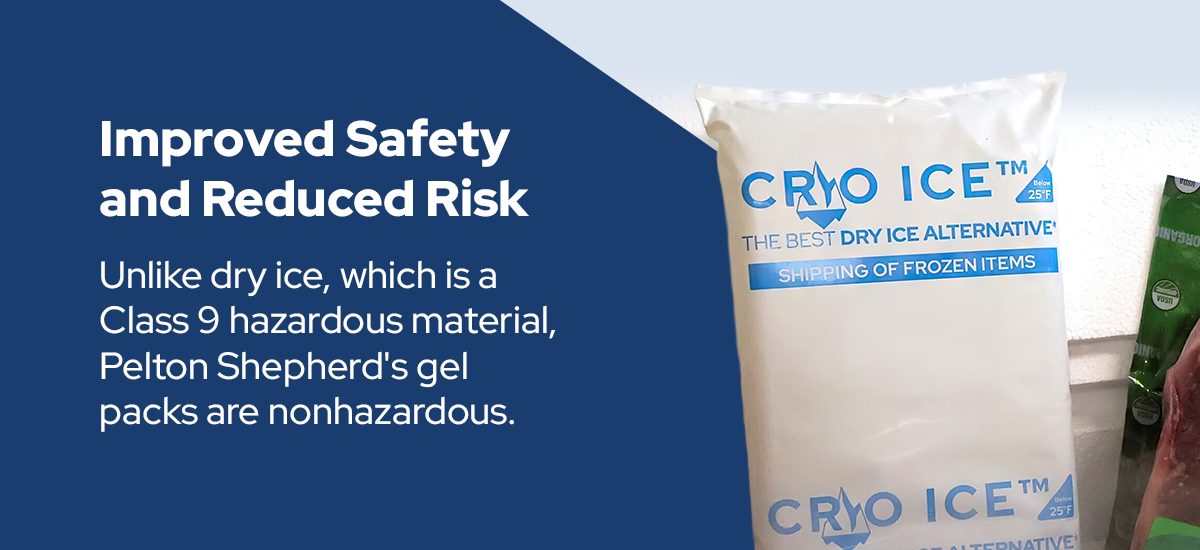
Unlike dry ice, which is a Class 9 hazardous material, Pelton Shepherd’s gel packs are nonhazardous. This eliminates the risks of cryogenic burns from handling, asphyxiation from carbon dioxide gas and potential explosions from pressure buildup in improperly vented containers.
No special hazmat training or labeling is required for handlers. Your team can pack shipments quickly without protective equipment or documentation concerns, reducing training costs and simplifying operations.
Efficiency and Cost Stability
Shipping with gel packs avoids the hazardous material surcharges that carriers impose for dry ice. Furthermore, sublimation requires your company to buy more dry ice than you need. Gel packs don’t sublimate, ensuring the cooling power you pay for is what you get.
Gel pack pricing is also stable and not subject to the seasonal fluctuations that can affect dry ice availability and cost. This predictability makes budgeting easier and protects you from unexpected expense spikes during peak shipping seasons.
Simplified Logistics
Because they aren’t hazardous materials, gel packs don’t require special documentation or specific venting in the packaging. In many cases, gel packs don’t require contracts with carriers, giving you flexibility to choose the most cost-effective shipping option for each order.
Custom cold chain shipping solutions are available, and you can order tailored gel packs to fit your specific packaging dimensions. You can also opt for custom-printed films to feature your business’s logo or brand messaging. This simplifies the entire packing and shipping process while augmenting your brand presence.
Sustainable and Eco-Friendly Options
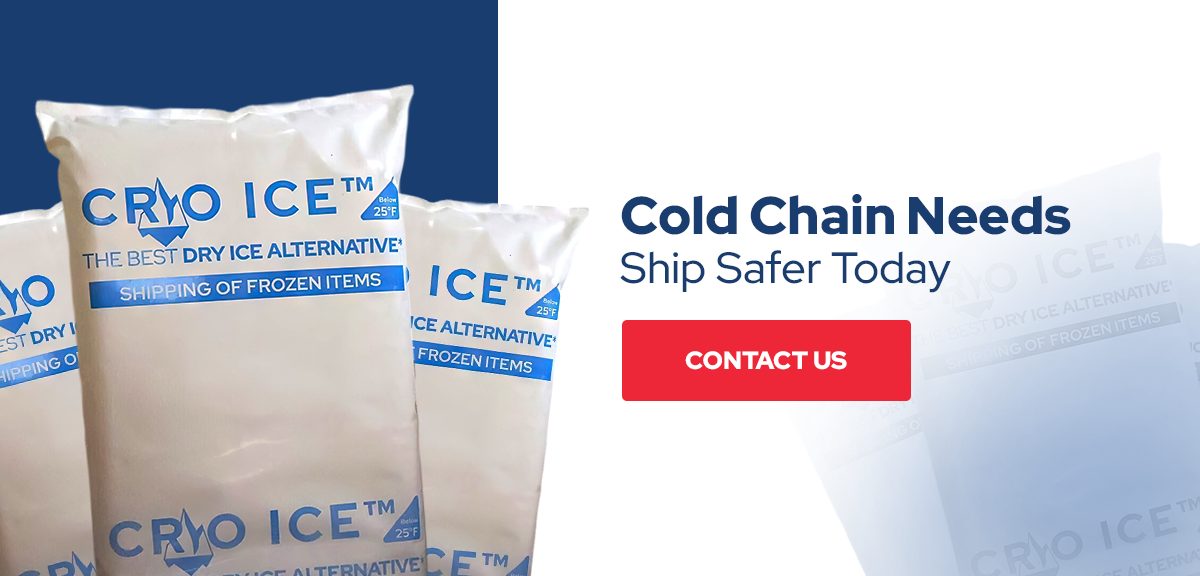
Pelton Shepherd offers a range of innovative, sustainable products that are far more environmentally friendly than dry ice. Cryo Ice™ is a specially formulated gel pack designed to maintain a temperature below 25° Fahrenheit during its thawing phase, making it a reliable and cost-effective dry ice alternative.
Terra Ice™ is the industry’s only certified compostable gel pack, and Vortec Ice™ features a drain-safe, septic-safe gel for convenient, low-impact end-user disposal options.
Choose the Right Solution for Your Cold Chain Needs
While shipping with dry ice is possible when you follow strict protocols, modern gel pack solutions from Pelton Shepherd offer a simpler, safer path forward. You’ll eliminate hazmat training requirements, avoid carrier surcharges and reduce the risk of rejected shipments — all while maintaining the temperature control your products demand.
Our team understands the challenges of cold chain logistics and can help you identify the right solution for your specific needs. Request a quote and discover how Pelton Shepherd’s innovative cold chain solutions can streamline your shipping operations.