

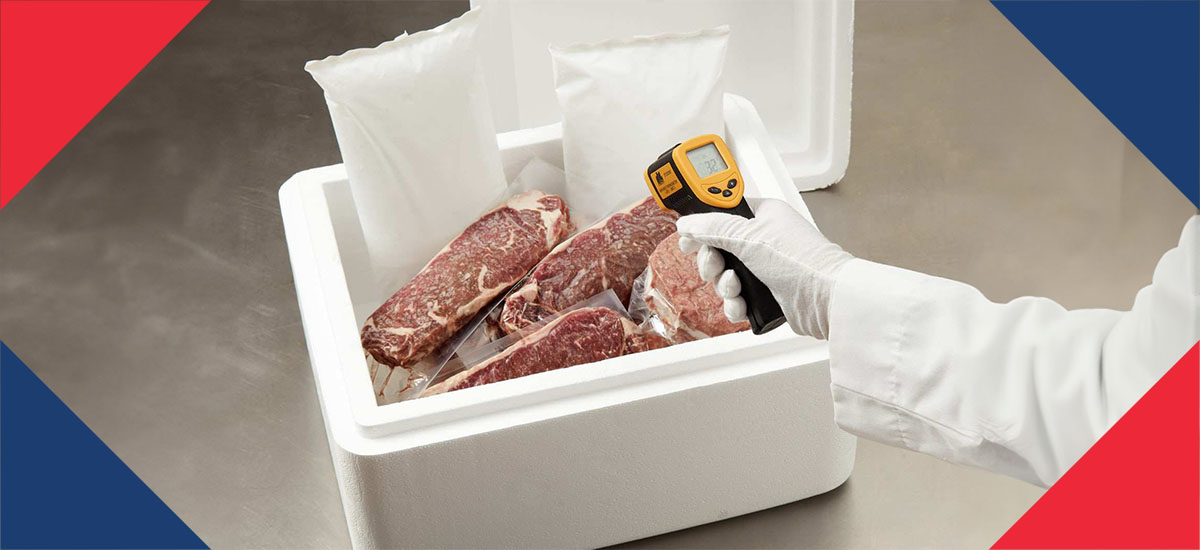
Shipping frozen meat requires precise temperature control to prevent spoilage and product loss, but it isn’t easy. Factors like environmental conditions, improper packaging or unexpected traffic delays can make it challenging to prevent temperature excursions. Consider that an estimated $600 billion worth of food is wasted globally each year before it even reaches the consumer.
Whether you need to ship meat to a distribution center, retailer or directly to consumers, strategic planning and reliable refrigerants help ensure product quality from your facility to the end user.
Considerations When Shipping Frozen Meat
Before shipping frozen or cold products, consider the following factors:
- Transit duration: A longer duration, such as a two-day delivery period, could require more gel packs to keep meat below a safe temperature, depending on ambient conditions and package insulation. Ideally, plan to ship frozen meat within 24 hours to enhance delivery quality.
- Vulnerabilities: Identify potential hazards that could impact transit time or product quality. For example, consider all points along your cold chain — from facility to consumer — any vulnerabilities present at each point and proactive measures your team can take.
- Budget: Shipping perishables requires careful budget planning to ensure the cost of packaging materials and refrigerant does not exceed the cost of the product being shipped. Consider ways to lower shipping expenses while maintaining product integrity, such as choosing cost-effective refrigerants to keep meat cold.
How to Ship Meat
Follow these steps to ship your product and maintain temperature control.
Choose a Refrigerant Solution
Select a reliable refrigerant to protect your product from temperature deviations during transit. With a eutectic point below 25F, Cryo Ice™ Gel Packs are specially designed to act as a dry ice alternative and keep frozen products cold until they reach their destination.
Pack at least a pound of gel pack for every pound or two of product, and ensure the gel packs are frozen beforehand to enhance effectiveness.
Select an Insulated Shipping Box
Choose an insulated shipping box, such as a 2-inch thick Styrofoam container, to keep heat out and cold in. Plan to place this container inside a durable cardboard box.
Pack Products Strategically
Before packing meat, line the box with a plastic sheet and place the product in a sealed plastic bag to enhance insulation and protect the shipping box from moisture. Then, place frozen gel packs on each side of your product. Fill the rest of the container with insulating materials like cellulose wadding.
Properly Seal and Label the Package
Seal along the horizontal and vertical seams of the shipping box with heavy-duty packing tape. Label the box as perishable to promote proper handling.
Partner With Pelton Shepherd for Peace of Mind
At Pelton Shepherd, we offer dependable, cost-effective refrigerant solutions to simplify the process of shipping meat, dairy and other perishable goods. You can count on our gel packs to provide precise temperature control when cold matters most.
We also offer a Conditioning Operations, Logistics and Delivery (COLD) program to ensure you have pre-conditioned gel packs for shipping when you need them. Contact us today to learn more about our cold chain solutions or request a quote.