


The demand for direct-to-consumer (DTC) shopping is changing the supply chain landscape, including the shipment of perishables. In 2024, the cold chain market value was approximately $312.4 billion. By 2030, the market will likely hit $447.8 billion.
As consumers expect speedy and reliable deliveries, it is essential to meet these expectations to maintain customer satisfaction. This article examines the challenges of cold chain logistics, guides you in overcoming them and provides key steps to implement a successful strategy for your business.
What Is Cold Chain Shipping?
Cold chain shipping is the transportation and delivery of perishable goods such as food, beverages and medicines in temperature-controlled environments. Each stage of the transportation process must follow the storage requirements of the items to ensure consumer safety and that they are in the correct condition.
By transporting perishable goods without temperature control, they can become spoiled. For vaccines, it is essential to maintain a temperature between 36° Fahrenheit and 46° Fahrenheit. The ideal temperature for vaccines is 40° Fahrenheit. If a vaccine shipment has a temperature outside of this range, it may affect the vaccine’s potency. The whole shipment will be unsuitable for consumers.
Other perishable products, such as fresh fish, must be kept refrigerated at a temperature of 32° Fahrenheit.
5 Common Cold Chain Logistics Challenges
Despite the sector’s growing demand, problems can still arise for your business. For example, delivery locations can indicate shipments have to travel through varying climates. Unpredictable last-mile conditions may also cause issues. Below are the five common challenges to be aware of and how to address them:
1. Changing Delivery Environments
Some shipments may have exposure to differing temperatures and environments. For example, a delivery may be left on a customer’s doorstep if they are unavailable to receive it at home. If perishable goods, such as food and medicines, are outside their ideal temperature conditions, it may lead to significant issues, including spoilage and bacterial growth.
Introducing insulated packaging and refrigerant solutions helps to keep perishables in their desirable conditions for as long as possible. Consider adding real-time temperature monitoring to determine any changes along the delivery journey.
2. Timings and Carrier Issues
Potential problems, such as weather-related restrictions and sorting issues, can cause delivery delays and lead to poor customer satisfaction. Additionally, for delivery routes that make multiple stops, these factors increase the likelihood of spoilage for perishables.
If transit times prove unpredictable, consider using reliable refrigerants and pack-outs to help maintain perishable goods for extended periods of time. High-quality solutions ensure you deliver with confidence, even during uncertain shipment time frames.
3. Last-Mile Costs
Transporting perishables from the warehouse directly to consumers is the most expensive part of the delivery process. The last-mile delivery stage accounts for approximately 50% of the total costs. To tackle this issue, consider implementing sustainable packaging solutions, which can help keep costs low. Ensuring all shipments are the correct size also reduces costs.
4. Sustainability and Temperature Management
As an e-commerce company, you face the challenge of maintaining the correct temperature for perishable deliveries and providing sustainable packaging options. Sustainable packaging is a growing consumer demand — recyclability is “extremely” or “very important” to 77% of U.S. consumers.
To balance sustainability and temperature requirements, adopt packaging that covers all bases. Seek fully biodegradable and compostable packaging solutions to meet consumer expectations and your sustainability goals.
5. Compliance and Food Safety
Corresponding with temperature requirements, perishable goods — particularly pharmaceuticals and food products — must adhere to recommendations. The USDA Food and Nutrition Service and the U.S. Food and Drug Administration both provide advice regarding the handling of perishables and maintaining proper temperatures.
Introducing high-quality refrigerants and implementing real-time temperature monitoring during shipments ensures consistent standards across the board.
How to Build an E-Commerce Cold Chain Logistics Strategy
An effective cold chain process is crucial for shipping temperature-sensitive perishables. To align with the above common challenges and create a resilient cold chain strategy for your business, follow the key areas below:
Find the Best Packaging Solutions
From gel packs to foam packaging for transporting perishables, finding the right solutions benefits both your business and consumers. For example, using appropriate packaging prevents food or medicine safety issues and spoilage. It also limits the possibility of complaints, poor customer reviews and returns. Before fully committing to a packaging solution, test it against other types to ensure it is the best option.
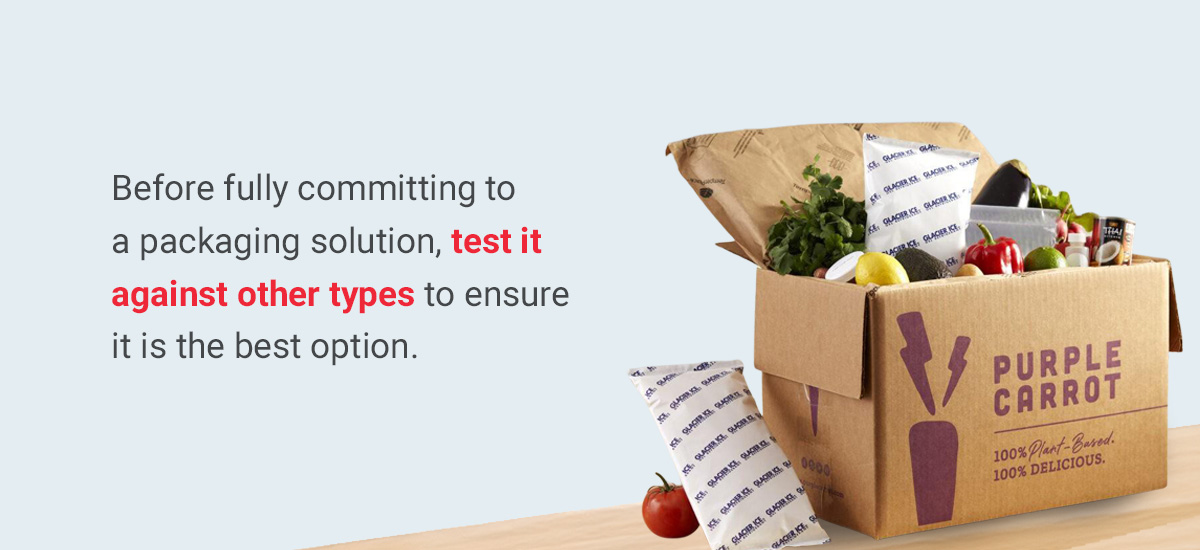
In addition to refrigerants and gel packs for food and medicines, consider incorporating insulated shipping boxes as a viable option. Using appropriate packaging sizes for deliveries reduces the weight of shipments.
Introduce Real-Time Monitoring
Aside from packaging solutions, introducing real-time temperature monitoring allows you to address issues with shipments as they arise. The safety of perishable products relies on the storage temperature, and real-time monitoring ensures all shipments are at their best quality. Installing smart sensors helps to maintain the correct standards and collect data to help you analyze performance and possible improvements.
Explore Different Shipping Carrier Partners
The shipping carrier you work with must agree to follow the necessary standards and regulations for delivering perishable goods. Having a mutual understanding of specific temperature control requirements ensures that shipments are of the highest quality. It also maintains your reputation. When reviewing shipping carriers, look for prior experience in delivering temperature-sensitive products.
Locate Fulfillment and Distribution Centers
Storing perishable goods is another crucial factor to consider when thinking about maintaining safety standards and meeting consumer expectations. Before making an agreement with fulfillment and distribution centers, review particular hot spots for consumer traffic. These areas indicate good locations to search for centers to meet consumer needs. Like with shipping carrier partners, look for previous experience with storing perishable goods.
Consider Fluctuating Consumer Demand
The volume of e-commerce orders can peak at certain times of the year and decrease during other seasons. Adopting a flexible supply chain enables you to meet demand during busy periods. For example, you might keep additional packaging and refrigerants on standby to fulfill customer orders. Another key point is to consider introducing another shipping carrier during busy periods in case your current carrier experiences delays.
Pelton Shepherd Delivers Your E-Commerce Cold Chain Solutions
At Pelton Shepherd, our mission is to help you exceed consumer demand and reach full potential with your cold chain shipping strategies. With over 70 years of experience delivering cold chain supply technology to businesses across the U.S., including innovative gel packs and solutions for perishables.
From leakproof Glacier Temp™ gel packs to our sustainable TerraTemp™ solutions and CuraTemp Pro gel ice packs, our offerings ensure the best shipping processes. You can also benefit from our Conditioning Operations, Logistics and Delivery (COLD) program. With the help of over 80 cold storage partners and eight manufacturing facilities, our team ensures you have access to pre-conditioned refrigerants to fulfill shipment requirements.
Complete our contact form to ask any questions you may have. You can also request a quote online to begin your cold chain shipping journey.